> For the complete documentation index, see [llms.txt](https://help.directcloud.net/llms.txt). Markdown versions of documentation pages are available by appending `.md` to page URLs; this page is available as [Markdown](https://help.directcloud.net/test/admin_manual-1/undefined-2/undefined-1/search_user.md).
# 사용자를 검색하는 방법
### 개요
‘계정 관리’ 메뉴에서는 ‘사용자 ID’와 ‘이름’에 포함된 문자를 키워드로 사용하여 사용자를 검색할 수 있습니다.\
이 매뉴얼에서는 사용자 목록에서 특정 사용자를 검색하는 방법에 대해 설명합니다.
***
### 제한·보충사항
* 관리자 권한이 부여된 사용자는 관리자 페이지의 '계정 관리'를 사용할 수 있습니다.
* ‘이메일 주소’에 포함된 문자로는 검색할 수 없습니다.
* 공백으로 구분하여 여러 개의 키워드를 동시에 검색하는 것은 불가능합니다.
* 2단계 이하의 하위 그룹을 선택한 상태에서는 사용자를 검색할 수 없습니다.
* 검색 결과는 등록일 기준 내림차순으로 표시됩니다.
* 검색 결과에 표시된 사용자는 CSV 파일로 다운로드할 수 없습니다.
***
### 절차
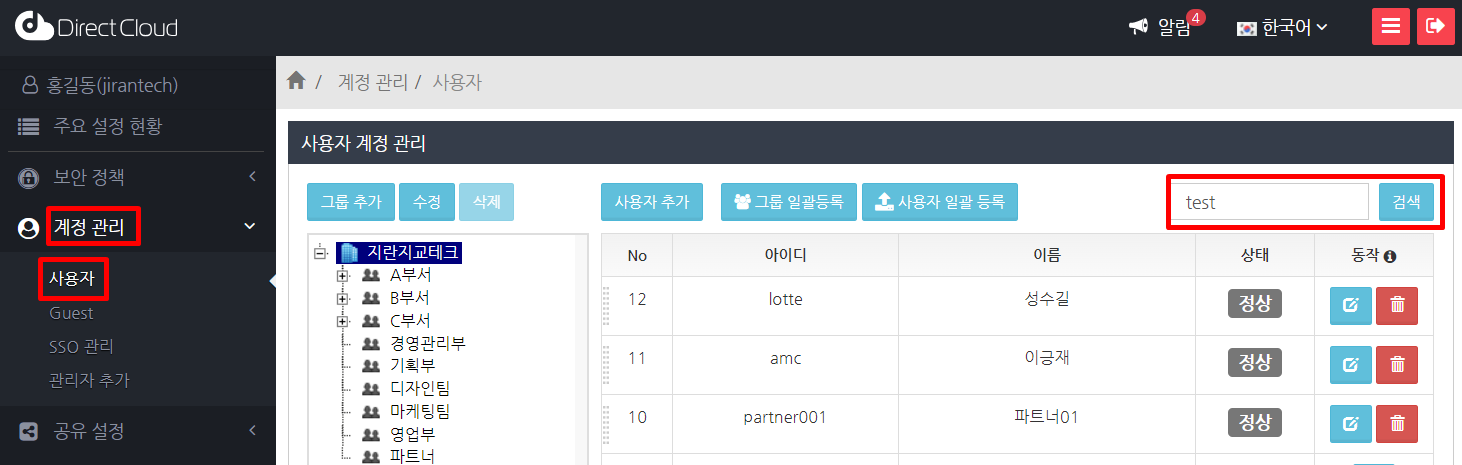
1. '계정 관리' > '사용자' 메뉴를 선택하고 오른쪽 상단에 표시된 검색창에 검색 키워드를 입력한 다음 검색 버튼을 클릭합니다.
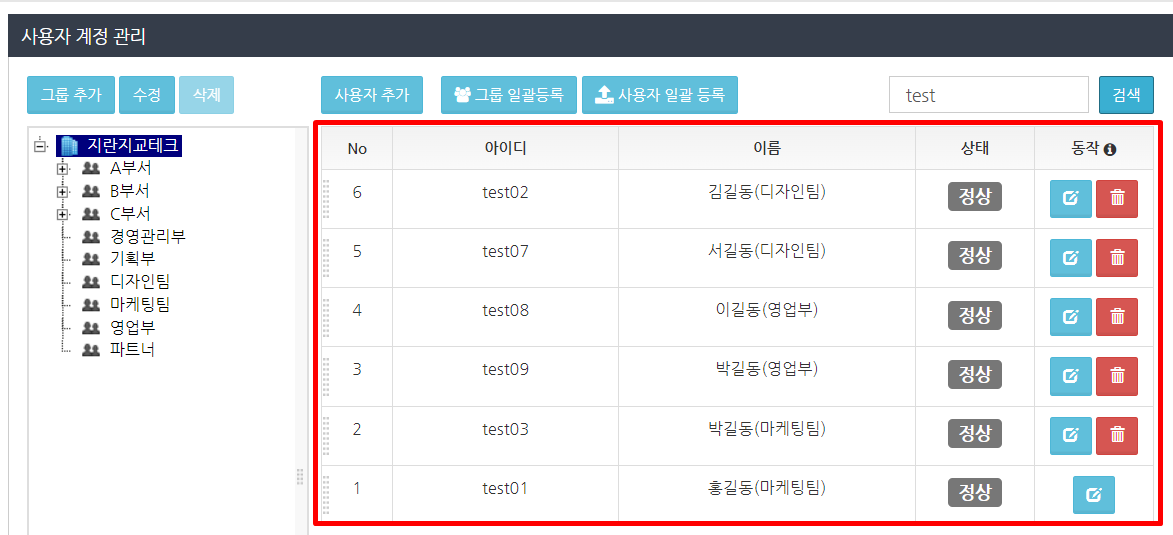
검색 결과가 표시됩니다.