# no-reply 메일에 회신할 수 있도록 할지 여부를 설정하는 방법

### 개요 <a href="#a03" id="a03"></a>

DirectCloud의 아래 기능에서 전송된 알림 메일의 발신자에는 '<no-reply@directcloud.jp>'라는 no-reply 메일 주소가 표시됩니다.

* 링크 생성
* 파일첨부 메일발송
* 업로드 요청
* Guest 초대
* Connect User 초대
* 파일별 코멘트

이 매뉴얼에서는, 위 기능으로 수신자에게 전달된 no-reply 메일에 실제로 메일을 전송한 보낸 사람의 메일 주소를 포함하여 회신할 수 있도록 할지 여부를 설정하는 방법에 대해 설명합니다.

***

### 제한·보충사항 <a href="#a04" id="a04"></a>

* 관리자 권한이 부여된 사용자는 관리자 페이지의 '공유 설정' 메뉴를 사용할 수 있습니다.
* 이 매뉴얼의 설정은, 아래 기능으로 전송된 알림 메일만을 대상으로 합니다.\
  그 외 기능으로 전송된 알림 메일은, 회신처 메일 주소가 '<no-reply@directcloud.jp>'로 고정되기 때문에, 발신자의 메일 주소로 회신할 수 없습니다.
  * 링크 생성
  * 파일첨부 메일발송
  * 업로드 요청
  * Guest 초대
  * Connect User 초대
  * 파일 코멘트
* 이 매뉴얼의 설정과 관계없이, 알림 메일 본문에 있는 '발신자', '초대자', '등록자'에는, 해당 기능을 사용한 사용자의 이름이 표시됩니다.

***

### 절차 <a href="#a04" id="a04"></a>

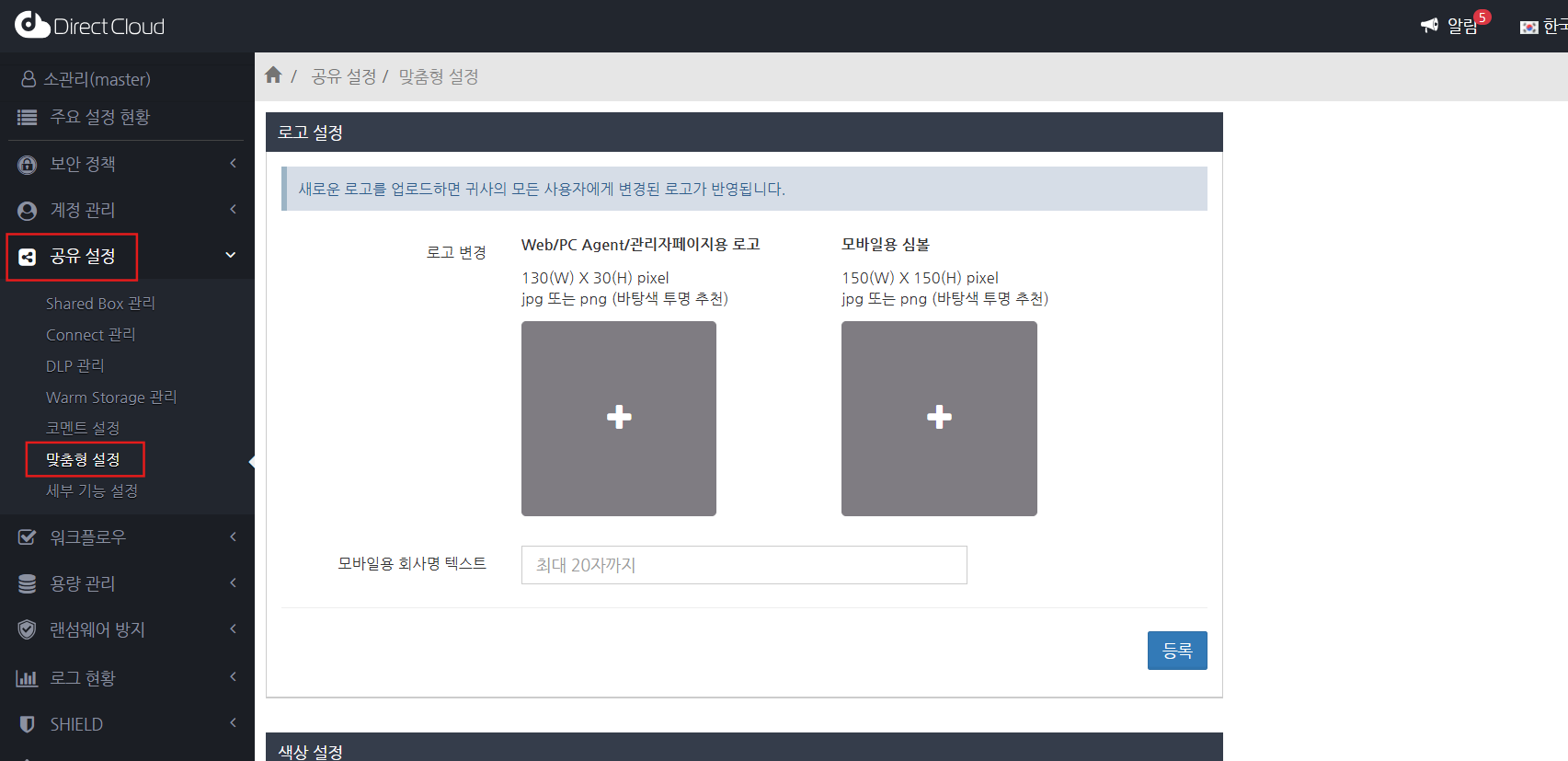
1. '공유 설정' > '맞춤형 설정' 메뉴를 클릭합니다.

<figure><img src="/files/Y2WJmzSKdiPpe7kMMRER" alt=""><figcaption></figcaption></figure>

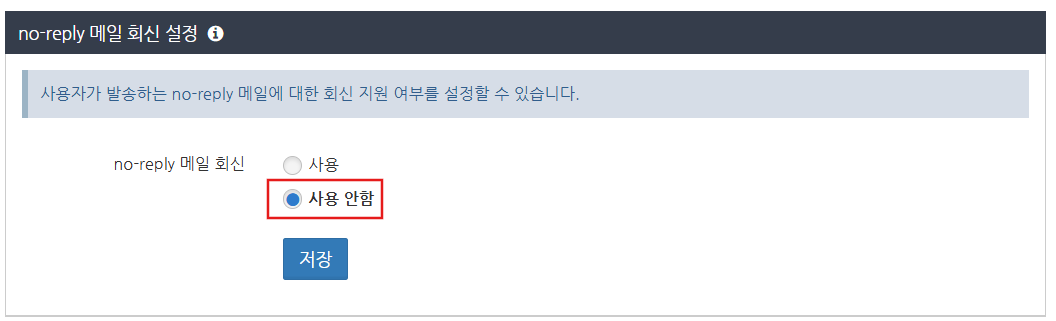
2. 'no-reply 메일 회신 설정'에서, 'no-reply 메일 회신'의 '사용' 또는 '사용 안함'을 선택합니다.

<figure><img src="/files/uwNR3v61kGjLzUqkXazF" alt=""><figcaption></figcaption></figure>

<table><thead><tr><th width="190">항목</th><th>설명</th></tr></thead><tbody><tr><td>사용</td><td>수신자에게 도착한 메일에는 '사용자 이름no-reply@directcloud.jp<br>'와 같이 표시되지만, 회신 시에는 실제로 DirectCloud 기능을 사용하여 메일을 발송한 사용자의 메일 주소가 설정됩니다.</td></tr><tr><td>사용 안함</td><td>no-reply 메일에 회신할 수 없게 됩니다.<br>회신처는 'DirectCloudno-reply@directcloud.co.jp<br>'로 고정되기 때문에, 메일에 회신하더라도 발송한 사용자에게는 전달되지 않습니다.</td></tr></tbody></table>

3. '저장' 버튼을 클릭 합니다.

<figure><img src="/files/Omz7K1c9Rzz5uVn58YqY" alt=""><figcaption></figcaption></figure>


---

# Agent Instructions: Querying This Documentation

If you need additional information that is not directly available in this page, you can query the documentation dynamically by asking a question.

Perform an HTTP GET request on the current page URL with the `ask` query parameter:

```
GET https://help.directcloud.net/admin_manual/custom_settings/noreply_response.md?ask=<question>
```

The question should be specific, self-contained, and written in natural language.
The response will contain a direct answer to the question and relevant excerpts and sources from the documentation.

Use this mechanism when the answer is not explicitly present in the current page, you need clarification or additional context, or you want to retrieve related documentation sections.
